


婆娑舞集在山海身體研究的創作脈絡
The Posuo Dance Space's longs-standing creative lineage of research on the body of mountains and seas
山海 → 人與天地
樹與風 → 身體與自然. 海岸儀式 → 身體與場域
行走山野 → 身體與地景
Mountains and Seas → Humanity and Heaven and Earth
Trees and Wind → Body and Nature
Coastal Ritual → Body and Space
Walking in the Mountains and Fields → Body and Landscape
身體 × 山海 × 儀式感 × 場域 × 東方身體意象
Body Mountains and Seas Ritual Venue Eastern Body Imagery
陳淑卿的創作本身具有:
人與海之間的身體 | 裙擺與女性群體
身體圓弧形動作 | 漂流木的儀式性
風的吹動樹的翻動 | 身體輕盈如風
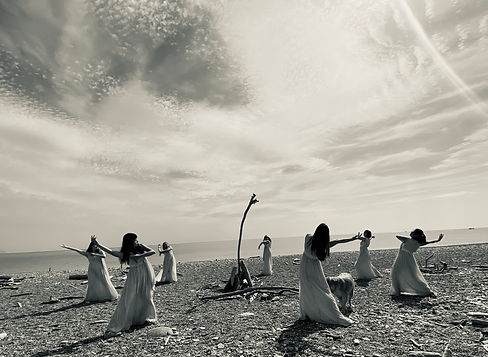
漂流木、石頭、海水、風、沙、植物,本身是非常強的舞台元素,場域自己參與創作。而地點、天氣、時間、身體,這些元素決定了作品走向。
Chen Shuching's creations inherently possess the following characteristics: female groups, skirts, arm lines, circular movements, ritualistic elements, and driftwood. Driftwood, stones, seawater, wind, sand, and plants are all very strong stage elements, with the venue itself participating in the creation. Location, weather, time, and the body collectively determine the work.

一根直立的枝/木頭它像是一個簡單的祭壇、圖騰或中心。
舞者分散在海灘上產生一種當代海岸儀式的感覺
A single upright branch/wood acts as a simple altar, totem, or centerpiece.Dancers scattered across the beach create a sense of a contemporary coastal ritual.
一個正在發生的時間標記
太陽正在下降、海正在移動。人在海邊站立、伸展。「時間」本身就變成編舞元素,身體不是固定的物件,而是時間流動中的存在。
A time marker in progress:
The sun is setting, the sea is moving. People stand and stretch on the beach."Time" itself becomes a choreographic element; the body is not a fixed object, but an existence within the flow of time.
